Free BMET & HTM Multimodal AI Utility · Zero Signup
SBI Medical Device Vision & UDI Scanner
Upload or snap any medical device, serial plate, or component photo for live identification, condition notes, openFDA recall screening, and replacement parts matching—powered by SBI (Super Biomedical Intelligence).
Distilled from 300,000+ clinical and biomedical equipment images (52,482 validated across 329 medical device classes), SBI Vision AI achieves 94.7% identification accuracy from standard smartphone photos—cross-checking 23M+ openFDA safety records and 11,644+ catalog models in seconds with zero image storage and zero external model training.
Upload a Medical Device Photo or Inspect Validated Sample Scans
Drop or snap any device photo to run a live SBI multimodal scan—or test one of the three validated clinical presets below.
94.7% Validated Accuracy · 329 Equipment Classes
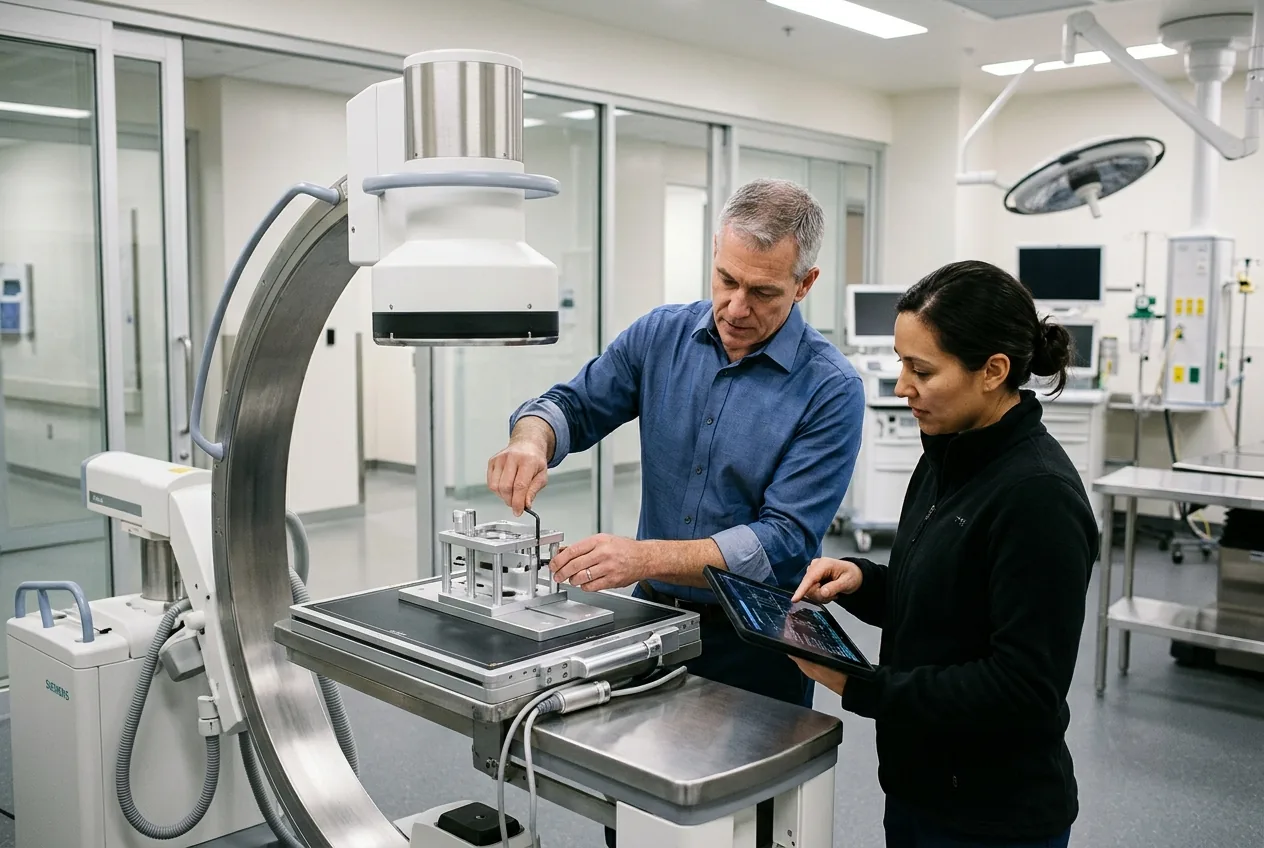
Mobile Fluoroscopy C-Arm — Instant Modality, Manual & Donor Match
Identifies OEM series and subsystem assembly from a single photo, retrieves cited service schematics, checks active FDA recalls, and surfaces verified replacement or donor-harvested parts.
How 94.7% SBI Vision Turns Smartphone Photos Into Clinical Action.
Whether auditing a 500-bed hospital tower, grading surplus imaging assets, or intaking depot repairs on a receiving dock, SBI eliminates manual model transcription.
Step 01
Photo & UDI Label Extraction
Reads device chassis geometry, front-bezel layout, and UDI/serial data plates directly from any technician smartphone or tablet.
Step 02
329-Class Condition Grading
Classifies manufacturer, model family, missing accessories, and visible cosmetic or cable wear across 52,482 benchmarked clinical images.
Step 03
Parallel openFDA & Manual Match
Cross-checks active Class I–III FDA recalls in under 2 seconds and links cited OEM service manual procedures for reported faults.
Step 04
Parts, Salvage & CMMS Sync
Surfaces verified stock on shop.ezmedsource.com, $0 Multi-RFQ repair quotes, or pre-staged work orders in EzBizPortal or Nuvolo/WebTMA.
Zero-PHI Safeguards & Sovereign Deployment
Zero Image Retention Online—Or 100% Air-Gapped Inside Your Hospital.
Clinical cameras belong near patient-care equipment only when strict data boundaries are enforced by architecture, not promises.
Public Browser Utility · Ephemeral RAM Only
Zero Storage, Zero PHI & Zero Model Training
Photos submitted in this browser demo are resized client-side, evaluated strictly in volatile memory over TLS, and discarded immediately after the JSON readout returns. Do not include patient faces or on-screen PHI waveforms.
For hospital-wide inventory walks and surgical bay intake, deploy SBI Vision inside your own single-tenant VPC or air-gapped on-premise GPU rack so device photos never leave your facility firewall.
Common Questions About SBI Multimodal Device Vision.
How accurate is the EzMedSource SBI Medical Device Vision Scanner?
SBI Vision achieves 94.7% validated top-match accuracy across 329 medical equipment classes and 52,482 curated clinical images (distilled from over 300,000 real biomedical shop, hospital audit, and auction photographs). Always verify serial-specific repair actions against the physical OEM data plate and service manual.
Are uploaded medical device photos stored or used to train public AI models?
No. Images scanned in this web utility are processed strictly in ephemeral memory to return your device identification, openFDA recall check, and catalog matches—never written to disk, shared, or used to train external AI models.
What clinical and sourcing data does SBI return from a single device photo?
In one pass, SBI extracts manufacturer, model, equipment class, visible serial/UDI text, physical condition observations, active U.S. FDA Class I–III recall notices, and live replacement equipment or parts matches from shop.ezmedsource.com.
Can our hospital run SBI Vision locally for fleet inventory audits and CMMS intake?
Ready to Audit Hospital Shelves or Receiving Docks From Any Phone?
Pair smartphone device vision with cited OEM manual diagnostics, 5-minute Automated RMA Integrations, and zero-egress local deployment in a 4-week pilot.